 By Admin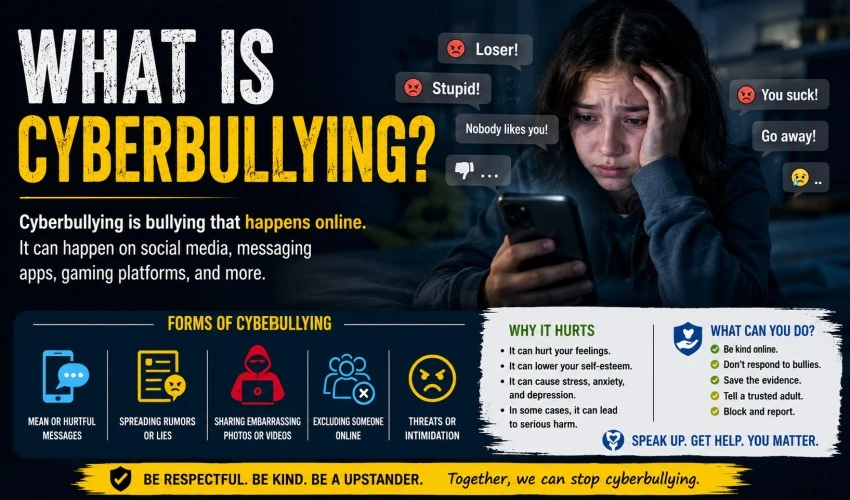
The internet has changed the way we connect, learn, and play — but it has also opened a new door for bullying to walk through. Unlike the schoolyard taunts of past generations, cyberbullying doesn’t end when the final bell rings. It follows kids (and adults) home, into their bedrooms, and onto the screens they check right before falling asleep. Understanding what cyberbullying really looks like, and how widespread it has become, is the first step toward stopping it.
What Is Cyberbullying?
Cyberbullying is the use of digital technology — social media, texting, gaming platforms, or messaging apps — to harass, threaten, humiliate, or intimidate another person. It can take many forms: spreading rumors online, sending threatening messages, excluding someone from a group chat, posting embarrassing photos or videos without consent, or creating fake accounts to impersonate and mock someone. What makes it uniquely damaging is its reach and permanence — a single post can be seen by hundreds of people within minutes, and it rarely disappears completely once it’s online.
Below are ten facts that reveal just how serious, common, and complex this issue has become.
1. Cyberbullying Has Reached Historic Highs
Cyberbullying isn’t a fringe problem — it’s mainstream. Long-term tracking of American teenagers shows that lifetime experiences of online harassment have climbed dramatically over the past decade, with more than half of teens now reporting they’ve faced some form of cyberbullying at some point in their lives. What was once considered a rare or isolated experience has become closer to a shared reality for adolescents growing up online.
2. It Doesn’t Stop When Kids Log Off
Traditional bullying was often confined to the school day. Cyberbullying has no such boundaries. Because most young people carry a smartphone everywhere, harassment can arrive at any hour — during dinner, in the middle of the night, or on weekends. This around-the-clock exposure is part of why cyberbullying can feel so inescapable to those experiencing it.
3. Boys and Girls Experience It Differently
For years, researchers assumed cyberbullying affected boys and girls at roughly equal rates. Newer survey data complicates that picture: some recent studies show adolescent boys reporting slightly higher overall rates of being targeted, while girls remain more likely to face specific tactics like rumor-spreading and image-based harassment. The takeaway isn’t that one gender has it “worse” — it’s that the forms of abuse differ, and prevention strategies need to reflect that nuance.
4. Most Victims Never Tell an Adult
One of the most sobering realities of cyberbullying is silence. Most young people who are targeted never report it to a parent, teacher, or school administrator. Common reasons include fear of losing phone or internet privileges, worry that adults won’t understand or will overreact, and concern that speaking up will make the bullying worse. This silence makes early detection incredibly difficult for the adults who want to help.
5. Exclusion Is More Common Than People Realize
When people picture cyberbullying, they often imagine cruel comments or threats. But one of the most frequently reported forms is something quieter: deliberate exclusion, such as being left out of a group text or chat on purpose. It may seem less severe on the surface, but social exclusion can be deeply painful, especially during adolescence when peer belonging feels central to identity.
6. It Peaks Around Early Adolescence
Cyberbullying tends to spike around age 13, a period marked by increased social media use, shifting friend groups, and heightened sensitivity to peer approval. Younger teens and older teens experience it differently too — research suggests that as teens get older, reported rates of experiencing cyberbullying tend to rise before leveling off in later adolescence.
7. Cyberbullying and Real-World Bullying Often Overlap
Cyberbullying rarely exists in isolation. Many young people who are bullied online are also bullied in person, and the two often reinforce each other — a conflict that starts at school can escalate online, or an online dispute can spill into the hallways the next day. This overlap means schools and parents can’t treat digital harassment as a separate, lesser issue from traditional bullying.
8. It’s Linked to School Avoidance and Mental Health Struggles
The consequences of cyberbullying extend well beyond hurt feelings. Data shows a growing share of teens have skipped school specifically because of online harassment, and a majority of teens now consider cyberbullying a “big problem” at their school. Studies consistently connect cyberbullying victimization with anxiety, depression, lower self-esteem, and, in severe cases, thoughts of self-harm — making it a genuine public health concern, not just a matter of hurt feelings.
9. Platforms Are Still Playing Catch-Up
Despite years of public pressure, many teens remain skeptical that social media companies are doing enough. Surveys show a large majority of teenagers believe platforms are doing only a fair or poor job addressing cyberbullying and harassment. While content moderation tools, reporting features, and AI detection systems have improved, enforcement is inconsistent, and new features (like disappearing messages or anonymous Q&A apps) frequently create fresh opportunities for abuse before safeguards catch up.
10. New Technology Is Creating New Risks
Cyberbullying is evolving alongside technology itself. AI-generated fake images, deepfake harassment, and sextortion scams targeting minors have surged in recent years, adding disturbing new dimensions to online abuse. Reports of these newer forms of exploitation to child safety organizations have climbed sharply, signaling that as tools become more sophisticated, so do the tactics used to harm others.
What Can Be Done?
Awareness is only the starting point. Effective prevention involves several layers working together:
- Open communication — Parents and caregivers who talk regularly and calmly about online experiences (without immediately confiscating devices) make kids more likely to come forward.
- Digital literacy education — Schools that teach students how to recognize, document, and report cyberbullying create safer digital communities.
- Clear reporting tools — Encouraging use of in-app reporting and blocking features, and knowing how to escalate to platforms or authorities when needed.
- Documentation — Saving screenshots and messages can be critical if the situation needs to involve a school or law enforcement.
- Support systems — Counselors, hotlines, and peer support programs help address the emotional toll, not just the behavior itself.
Final Thoughts
Cyberbullying is no longer a niche concern confined to a handful of unlucky kids — it’s a widespread reality shaping how an entire generation experiences childhood and adolescence online. The numbers make clear that this isn’t going away on its own. But with informed adults, proactive schools, more accountable platforms, and open conversations at home, the digital world can become a safer place for everyone who logs on.