 By Admin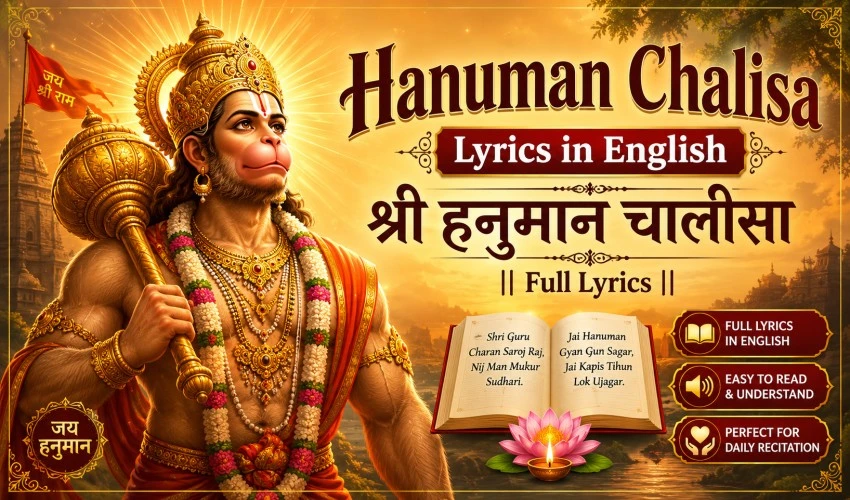
Few devotional compositions in Indian spiritual tradition carry the power, popularity, and reach of the Hanuman Chalisa. Recited daily by millions across the world, this forty-verse hymn dedicated to Lord Hanuman is believed to bring courage, protection, and peace of mind to anyone who chants it with devotion. Whether you are a lifelong devotee or someone discovering this sacred text for the first time, having the Hanuman Chalisa lyrics in English makes it accessible regardless of your fluency in Hindi or Sanskrit-based Awadhi, the language in which it was originally composed.
In this article, we bring you the complete Hanuman Chalisa lyrics transliterated into English, along with its history, significance, and the benefits associated with its regular recitation.
Who Wrote the Hanuman Chalisa?
The Hanuman Chalisa was composed by the poet-saint Goswami Tulsidas in the 16th century. Tulsidas, also renowned as the author of the Ramcharitmanas, wrote this hymn in the Awadhi language, praising the virtues, strength, wisdom, and devotion of Lord Hanuman — the most ardent devotee of Lord Rama. The word “Chalisa” is derived from the Hindi word “chalis,” meaning forty, referring to the forty verses (excluding the opening and closing couplets) that make up this powerful hymn.
Legend has it that Tulsidas composed this hymn after having a divine vision of Hanuman, who blessed him and guided him toward his spiritual path. Since then, the Chalisa has become one of the most recited prayers in Hindu households, temples, and gatherings.
Why Is the Hanuman Chalisa So Popular?
The popularity of the Hanuman Chalisa lies in its simplicity, rhythm, and the deep sense of protection it offers to those who recite it. It is believed that chanting the Chalisa can:
- Remove fear and negative energy
- Provide strength during difficult times
- Bring mental clarity and focus
- Protect against evil influences
- Instill confidence and courage
Because of these believed benefits, the Hanuman Chalisa is often recited every morning, on Tuesdays and Saturdays (days associated with Hanuman), or during times of personal struggle.
Hanuman Chalisa Lyrics in English (Full Text)
Below is the complete Hanuman Chalisa transliterated into English for easy reading and pronunciation.
Doha (Opening Couplet)
Shri Guru Charan Saroj Raj, Nija Mana Mukura Sudhaari Baranau Raghubar Bimal Jasu, Jo Dayaku Phala Chaari
Buddhiheen Tanu Jaanike, Sumirow Pavan Kumar Bala Buddhi Vidya Dehu Mohi, Harahu Kalesh Vikaar
Chaupai (Main Verses)
- Jai Hanuman Gyan Guna Sagar Jai Kapis Tihu Lok Ujagar
- Ram Doot Atulit Bala Dhama Anjani-Putra Pavanasut Naama
- Mahaveer Vikram Bajrangi Kumati Nivar Sumati Ke Sangi
- Kanchan Varan Viraj Subesa Kanan Kundal Kunchit Kesha
- Haath Vajra Aur Dhwaja Viraje Kaandhe Moonj Janeu Saaje
- Sankar Suvan Kesari Nandan Tej Prataap Maha Jag Vandan
- Vidyavaan Guni Ati Chatur Ram Kaj Karibe Ko Aatur
- Prabhu Charitra Sunibe Ko Rasiya Ram Lakhan Sita Man Basiya
- Sukshma Roop Dhari Siyahi Dikhawa Vikat Roop Dhari Lank Jarawa
- Bhima Roop Dhari Asur Sanhare Ramchandra Ke Kaj Sanware
- Laay Sanjivan Lakhan Jiyaye Shri Raghuvir Harashi Ur Laye
- Raghupati Kinhi Bahut Badai Tum Mama Priya Bharat-Hi Sam Bhai
- Sahas Badan Tumharo Jas Gaave Asa Kahi Shripati Kanth Lagaave
- Sanakadik Brahmadi Muneesa Narad Sarad Sahit Aheesa
- Jam Kuber Digpaal Jahan Te Kavi Kovid Kahi Sake Kahan Te
- Tum Upkaar Sugreevahi Kinha Ram Milaye Raj Pad Dinha
- Tumharo Mantra Vibheeshan Maana Lankeshwar Bhaye Sab Jag Jaana
- Yug Sahasra Yojan Par Bhaanu Leelyo Taahi Madhur Phal Jaanu
- Prabhu Mudrika Meli Mukh Maahi Jaladhi Laanghi Gaye Achraj Naahi
- Durgam Kaj Jagat Ke Jete Sugam Anugraha Tumhre Tete
- Ram Duaare Tum Rakhvaare Hot Na Aagya Binu Paisaare
- Sab Sukh Lahai Tumhari Sarna Tum Rakshak Kahu Ko Darna
- Aapan Tej Samharo Aapei Teenon Lok Haank Te Kaanpei
- Bhoot Pisaach Nikat Nahi Aavai Mahaveer Jab Naam Sunaavai
- Nase Rog Harai Sab Peera Japat Nirantar Hanumat Beera
- Sankat Se Hanuman Chhudaave Man Kram Vachan Dhyan Jo Laave
- Sab Par Ram Tapasvee Raja Tin Ke Kaj Sakal Tum Saja
- Aur Manorath Jo Koi Laave Soi Amit Jeevan Phal Paave
- Charon Yug Partap Tumhara Hai Persidh Jagat Ujiyara
- Sadhu Sant Ke Tum Rakhvare Asur Nikandan Ram Dulare
- Ashta Sidhi Nav Nidhi Ke Daata As Var Deen Janki Maata
- Ram Rasayan Tumhare Paasa Sada Raho Raghupati Ke Daasa
- Tumhare Bhajan Ram Ko Paavai Janam Janam Ke Dukh Bisraavai
- Anth Kaal Raghubar Pur Jaayee Jahan Janam Hari-Bhakt Kahayee
- Aur Devta Chit Na Dharai Hanumant Sei Sarv Sukh Karai
- Sankat Kate Mite Sab Peera Jo Sumire Hanumat Balbeera
- Jai Jai Jai Hanuman Gosaayee Kripa Karahu Gurudev Ki Naayee
- Jo Sat Baar Paath Kar Koi Chhutahi Bandi Maha Sukh Hoi
- Jo Yah Padhe Hanuman Chalisa Hoye Siddhi Saakhi Gaureesa
- Tulsidas Sada Hari Chera Keejai Naath Hridaya Mahn Dera
Doha (Closing Couplet)
Pavan Tanay Sankat Haran, Mangal Murti Roop Ram Lakhan Sita Sahit, Hriday Basahu Sur Bhoop
Meaning and Essence of the Hanuman Chalisa
Each verse of the Hanuman Chalisa glorifies a different quality of Lord Hanuman — his physical strength, his unwavering devotion to Lord Rama, his wisdom, his humility, and his role as a protector of devotees. The hymn describes his heroic deeds, including flying across the ocean to Lanka, burning the city with his tail, carrying the Sanjeevani herb to save Lakshman’s life, and serving as a loyal messenger of Rama.
Beyond the mythological stories, the Chalisa is also a guide to virtues such as courage, selflessness, discipline, and unwavering faith — qualities that devotees aspire to embody in their own lives.
How to Chant the Hanuman Chalisa Correctly
For those chanting the Hanuman Chalisa lyrics in English or transliterated form for the first time, here are a few tips:
- Sit in a clean, quiet place facing east or in front of a Hanuman idol or picture.
- Begin with the opening doha slowly to set the rhythm.
- Maintain a steady pace through the 40 verses — recitation should feel meditative, not rushed.
- Focus on devotion (bhakti) rather than just pronunciation accuracy, especially for beginners.
- End with the closing doha to complete the cycle of the prayer.
Many devotees prefer chanting it early in the morning after a bath, though it can be recited at any time, especially during moments of stress, fear, or when facing obstacles.
Benefits of Reciting the Hanuman Chalisa Daily
According to traditional belief and the experiences shared by countless devotees over generations, regular recitation of the Hanuman Chalisa offers the following benefits:
- Removes fear and anxiety — Verse 24 specifically mentions how evil spirits and negative energies stay away when Hanuman’s name is invoked.
- Improves focus and confidence — The rhythmic chanting is said to calm the mind and improve concentration.
- Provides protection — Devotees believe Hanuman acts as a guardian for those who chant his praises sincerely.
- Removes obstacles — Many verses speak of Hanuman’s ability to make difficult tasks easy for his devotees.
- Brings inner peace — The devotional rhythm and meaning offer emotional grounding during turbulent times.
Best Days and Times to Recite the Hanuman Chalisa
While the Hanuman Chalisa can be recited any day, Tuesdays and Saturdays are considered especially auspicious, as these days are traditionally associated with Lord Hanuman. Early morning (Brahma Muhurta) and evening (Sandhya) are considered ideal times for recitation, though many devotees also chant it before starting important tasks or during periods of hardship.
Conclusion
The Hanuman Chalisa is far more than a religious hymn — it is a source of strength, comfort, and spiritual connection for millions of devotees worldwide. Having access to the Hanuman Chalisa lyrics in English allows a wider audience, including those unfamiliar with Hindi script, to connect with this powerful prayer and experience its benefits. Whether recited for protection, peace of mind, or spiritual growth, the Hanuman Chalisa continues to be a timeless devotional treasure passed down through generations.
Chant it with sincerity, and let the blessings of Lord Hanuman guide you through life’s challenges.