 By Admin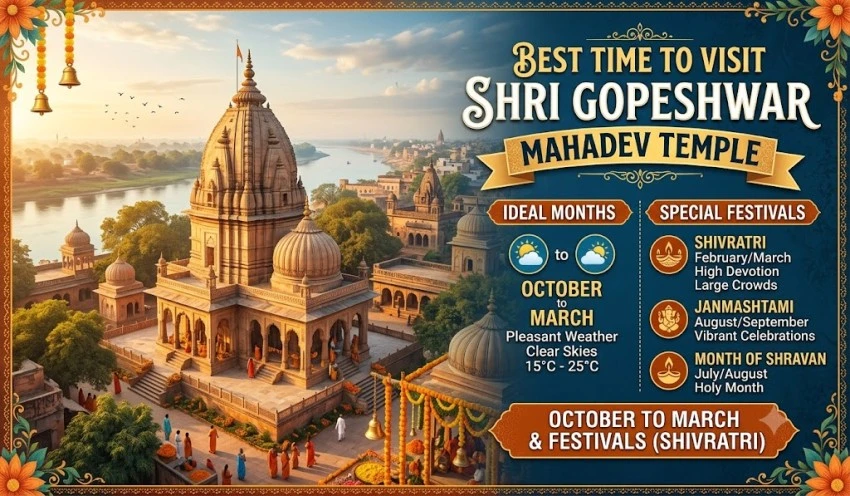
Why Gopeshwar Mahadev Is So Unusual
Most Shiva temples show the Lord as an ascetic, wrapped in ash and absorbed in meditation. At Gopeshwar Mahadev, Shiva appears as the devoted lover of Krishna. According to local tradition, Shiva longed to witness the divine Raas Leela, which was open only to the gopis. He is said to have taken the form of a gopi, adorned with a nose ring and bindi, to enter the dance. Krishna welcomed him and named him Gopeshwar, “Lord of the Gopis.”
The shrine reflects this story. Devotees offer sixteen adornments (solah shringar) to the Shivling, and in the evening the deity is dressed as a gopi. The temple also stands near Vanshi Vat, one of Vrindavan’s sacred sites tied to Krishna’s flute-playing and the Raas. Because the experience depends so much on crowd levels, weather and festival timing, choosing when you go matters.
The Short Answer
The best time to visit is between October and March, when Vrindavan’s weather is comfortable. Within that window, Sharad Purnima, Kartik month, and Maha Shivratri offer the richest spiritual atmosphere. If you prefer a calm, unhurried darshan, visit on a weekday morning in November, December or February.
October to November: Pleasant Weather and Festive Energy
After the monsoon, the air in Braj becomes noticeably softer. Daytime temperatures usually settle in the high 20s to low 30s °C, and the humidity falls.
This season carries deep significance for the temple. Sharad Purnima, the full-moon night in autumn, is traditionally linked to Krishna’s Maha Raas. Since Gopeshwar Mahadev is tied to that very story, this is arguably the most meaningful day to visit. Expect decorations, extended devotional singing and large crowds, so arrive early or plan an evening visit with patience.
Kartik month, which follows, is considered especially auspicious in Vrindavan. Pilgrims take part in lamp offerings, and the atmosphere throughout town is devotional. Diwali also falls in this period, and the temple town lights up beautifully, though accommodation fills fast.
December to February: Best for a Peaceful Darshan
Winter is the most comfortable and the most contemplative time to visit. Daytime temperatures hover around 15 to 22 °C, but mornings and nights can be cold, and dense fog is common in December and January, sometimes delaying trains and road travel. Carry warm layers, a shawl and comfortable footwear, since you will walk barefoot in temple premises.
The advantages are significant:
- Fewer crowds outside weekends and major festivals
- Easy walking between Vanshi Vat, the nearby ghats and other temples
- Longer, relaxed darshan without heat fatigue
- Better photography light in the soft morning sun
Winter also suits older pilgrims and families with children, who may struggle in extreme heat. If you want to explore multiple Vrindavan temples in one day, this is the season to do it.
February to March: Maha Shivratri and Holi
For a Shiva temple, Maha Shivratri (usually February or March) is the most important date of the year. Devotees fast, stay awake through the night and offer water, milk, bael leaves and flowers. At Gopeshwar Mahadev, the day carries additional charm because the deity’s gopi form draws visitors who may not come on any other occasion. Queues can be long, so go in the early hours or be prepared to wait.
Just after Shivratri comes Holi, which Vrindavan celebrates for days, often with unmatched color and music. This is a wonderful time for cultural immersion, but it is not the right choice if you want quiet prayer. Streets are crowded, hotel prices rise and the festive chaos can be overwhelming for first-time visitors.
April to June: Visit Only If You Must
Summers in Mathura-Vrindavan are harsh. Temperatures routinely exceed 40 °C and can approach 45 °C in May and June, with hot winds (loo) in the afternoon. Walking on sun-baked stone floors is uncomfortable.
If summer is your only option:
- Visit at sunrise or after sunset
- Carry water, electrolytes and a cap or umbrella
- Wear thin cotton clothing that still respects temple dress norms
- Avoid the midday hours entirely
Summer does have one benefit: crowds thin out, and early-morning darshan can be serene.
July to September: Monsoon Considerations
The rains bring relief from the heat and turn the surrounding greenery vivid, but humidity is high and downpours can disrupt travel plans. Lanes can become slippery, and some nearby areas may be waterlogged.
That said, this season includes highly meaningful occasions. Sawan (the month of Shiva, usually July to August) is when devotees throng Shiva temples, and Gopeshwar Mahadev sees steady pilgrim traffic. Janmashtami, Krishna’s birthday, transforms all of Vrindavan with decorations, music and enormous crowds. If you are devoted to either Shiva or Krishna, the spiritual rewards may outweigh the inconvenience, but plan with flexibility and carry rain protection.
Best Time of Day for Darshan
Beyond the season, the time of day shapes your experience:
- Early morning is calm and cool, ideal for quiet prayer and photography.
- Evening is when the gopi shringar and aarti draw the most atmosphere. Confirm the exact aarti schedule locally, as timings change with the season.
- Afternoon is typically a closure or rest period at many Vrindavan temples, so check before you travel.
Practical Planning Tips
- Verify timings and festival dates with the temple priests or local guides before traveling, as the lunar calendar shifts dates yearly.
- Book accommodation early for Sharad Purnima, Shivratri, Holi and Janmashtami.
- Travel by train to Mathura Junction, then take an auto or e-rickshaw to Vrindavan. Delhi to Mathura is a convenient journey of a few hours.
- Dress modestly and keep valuables secure, as Vrindavan’s lanes get busy.
- Combine your visit with Banke Bihari, Prem Mandir, ISKCON and the Yamuna ghats for a fuller pilgrimage.
Final Verdict
If you want the best balance of comfort and spiritual depth, visit between October and March. Choose Sharad Purnima for the Raas connection, Maha Shivratri for Shiva’s grandest worship, or a winter weekday for peace. Avoid peak summer unless you can manage early-morning hours, and treat the monsoon as a festival-driven option. Whatever season you pick, the sight of Shiva as Gopeshwar, humble and adorned in love for Krishna, is a memorable experience.